

Germany's state charges almost nothing for a marriage. The average wedding still costs about EUR 17,000, couples are marrying less than at any time since 1950, and the pricing model behind the venue-and-catering bundle is built so you cannot opt out. Here is what the numbers say, where the rules really bite, and what should change.
| The figure | What it means |
|---|---|
| EUR 17,006 | Average wedding cost in 2026, excluding honeymoon and ring (Bridebook Wedding Report) |
| 349,221 | Marriages in 2024, the lowest figure since records began in 1950 (Destatis) |
| EUR 60 | Typical official fee to register a marriage in Baden-Württemberg; the whole state share is under 1% of the bill |
The Paradox
Legally, getting married in Germany is a cheap administrative act. You register at the Standesamt, you show your papers, a registrar says the words, and you are married. Fees in the published schedules I checked run from roughly EUR 44 to EUR 60 for the registration check, a little more if foreign law has to be examined. Everything that makes a German wedding cost as much as a used car happens after that and outside the state: the venue, the catering, the drinks, the photographer, the dress, the flowers.
That is the first thing to be clear about, because a lot of the anger about wedding costs gets aimed at regulation. Some regulation does create real friction, as we will see below. But the money question is a market question. Couples do not pay EUR 17,000 because the state demands it. They pay it because a wedding has become a bundle product that is sold as one block, at one date, with one set of suppliers.
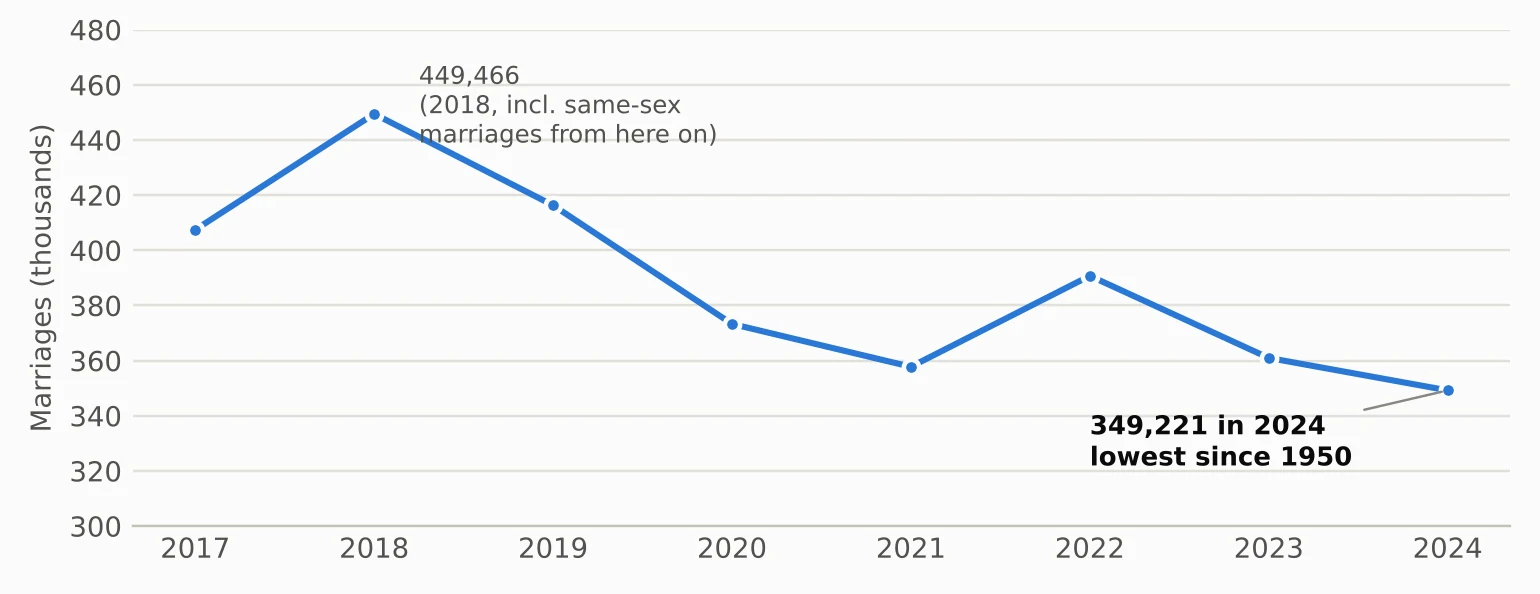
Chart 1. Marriages per year in Germany. Source: Federal Statistical Office (Destatis) via Statista; 2024 provisional; from 2018 including same-sex marriages.
Fewer people marry, and those who do marry later and stay married longer: Destatis counts about 129,300 divorces in 2024, far below the level of two decades ago. The industry is selling a once-in-a-lifetime product to a shrinking customer base. That is exactly the condition under which sellers push the per-customer price up.
What a Wedding Actually Costs
The Bridebook Wedding Report 2026, built on answers from more than 2,000 newlyweds and engaged couples, puts the average at EUR 17,006, up from EUR 15,629 in 2025 (+8.8% in one year). Add honeymoon and engagement ring and the average rises to EUR 20,263. An earlier survey by WeddyPlace had EUR 15,452 for 2024 and estimated the whole industry at about EUR 6.2 billion a year. These are self-selected surveys, not official statistics, so treat the exact numbers as a good indication, not a census.
Where the money goes
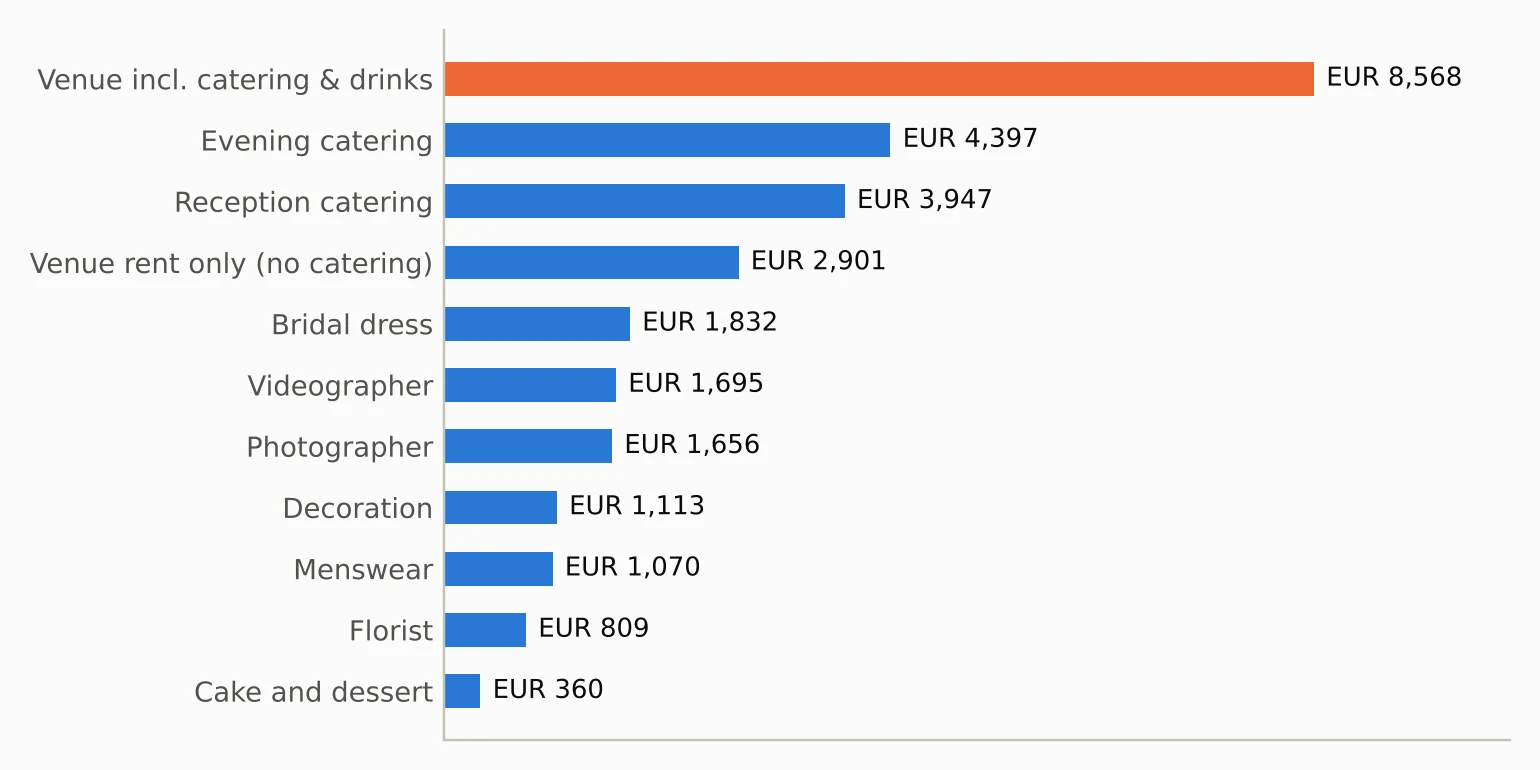
Chart 2. Average spend per category in 2026 among couples who booked it. Categories overlap (venue price often already includes catering) and are not meant to be added up. Source: Bridebook Wedding Report 2026.
Two things stand out. First, the venue-and-catering block dominates everything else by a wide margin. WeddyPlace had location plus catering at EUR 7,803 of EUR 15,452, roughly half of the whole budget. Second, the items couples think of as the glamorous part, the dress, the photographer, the flowers, are each small next to the dinner.
The industry's best defence deserves to be stated fairly: per-head cost is not exploding. Bridebook reports location and catering at about EUR 113 per guest in 2026, down 4% on the year, and the share of couples spending under EUR 10,000 is 28%. The squeeze is elsewhere, in how the price is structured.
The guest list is the price list
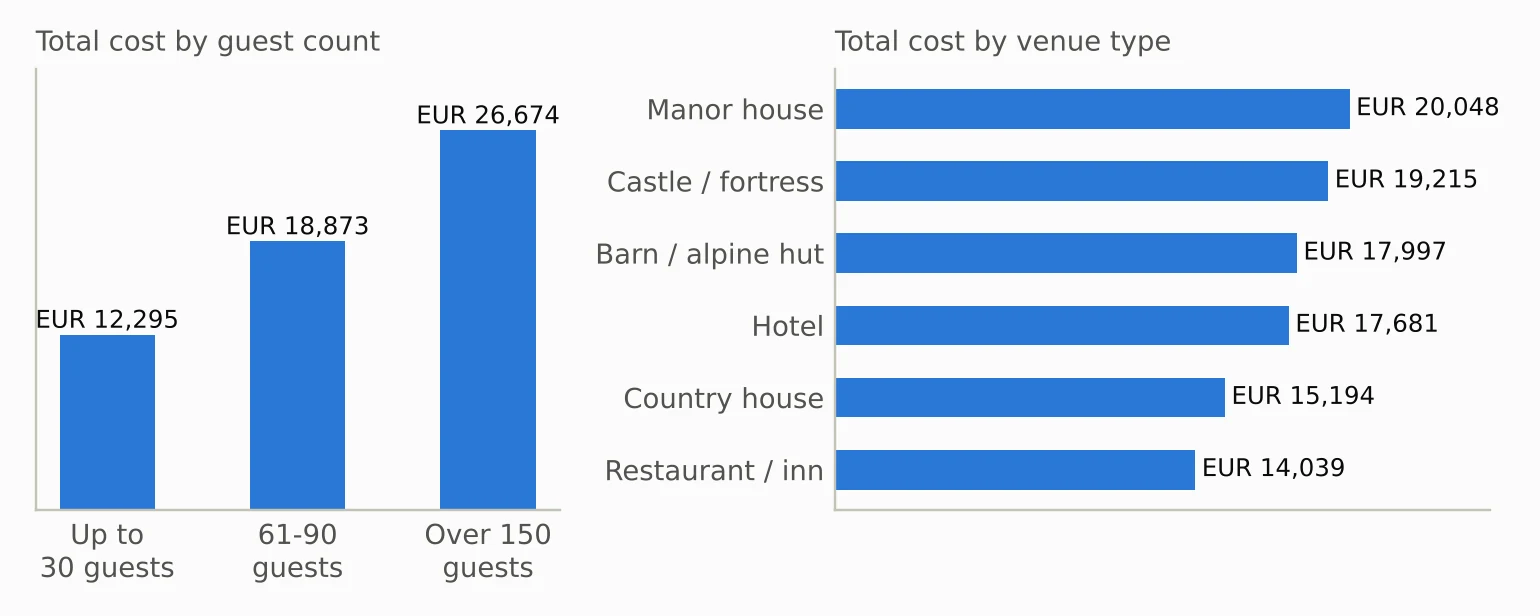
Chart 3. Average total cost by guest count and by venue type (selected categories only). Source: Bridebook Wedding Report 2026.
A wedding with up to 30 guests averages about EUR 12,300; one with over 150 guests about EUR 26,700. The cost roughly doubles, but the guests do not buy anything. Most of the extra is per-head food, drink, service and rentals: the part of the bill where the venue sets the rules. The cheapest venue types (restaurant, country house) sit around EUR 14,000 to 15,000, castles and manor houses around EUR 19,000 to 20,000.
The Bundle: How Venue and Catering Get Locked Together
The core complaint in the wedding debate is this: you book a venue, and the venue then tells you who may feed your guests and who may pour the drinks. Nothing in German law forces that. It is a commercial practice, and it shows up in the price sheets venues publish. Four mechanisms recur.
| Mechanism | How it works | Example from published venue documents |
|---|---|---|
| In-house catering only | The venue is the caterer. You compare one price, not a market. | Bridebook itself describes in-house catering as usually the most expensive model; free choice of caterer as often cheaper but more work. |
| Minimum spend | You must spend a set amount at the venue, whatever you order. The difference is billed as rent. | One venue: EUR 12,500 net off-season, EUR 16,000 net for Saturdays May to September, for 80 guests. |
| Drink sourcing and corkage | Your own wine is allowed only against a fee per opened bottle, or you must buy the venue's wine. | Corkage of EUR 18 net per opened bottle of wine and EUR 28 per bottle of spirits at one venue; a castle venue states a binding drink-purchase obligation. |
| Add-on services | Staff hours, planning flat fees, chair covers, set-up and clean-up are billed separately. | Staff at EUR 35 net per hour; planning flat fee for groups under 50 guests; chair covers at EUR 7 per piece. |
The Saturday premium
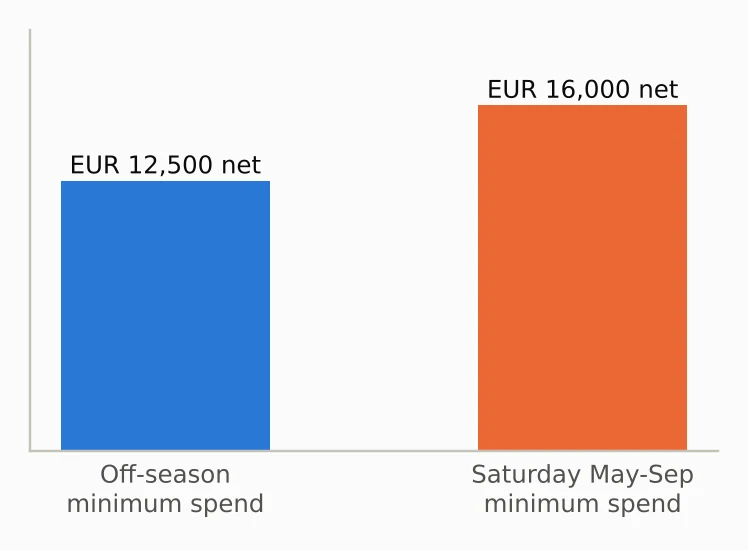
Chart 4. One venue's 2024 price sheet, 80 guests. Net prices.
For the same hall and the same 80 guests, the Saturday-in-season minimum spend is 28% higher than the off-season figure. Nothing about the food or the room changes. What changes is how many couples want that date, and the venue prices accordingly. That is ordinary peak pricing, but combined with a compulsory minimum it means the couple cannot walk away with a cheaper menu.
Is it a rip-off?
Here I have to be careful and honest. The structure is documented: bundled pricing, minimum spends, corkage, peak surcharges, per-hour staff. What I could not find in any public source is an audited margin: nobody publishes what a venue earns on the dinner it forces you to buy, or what the same buffet costs when the customer is a company rather than a bride. So the sharp claim, that couples pay a deliberate wedding premium, is a hypothesis the structure strongly suggests, not something the data proves.
What the structure does prove is the lack of competition at the point of purchase. Once a couple has paid a deposit on a date at a venue, they are a captive customer: every later price (menu, drinks, service, extra hours) is negotiated by a buyer who cannot leave. That is the economic heart of the problem, and it is a market-design issue, not a regulatory one.
Couples are already voting with their feet. Bridebook reports that 42% of couples held the ceremony and the party in the same location in 2025, up from 28% in 2024, mostly to save costs.
The State Is Not the Problem. Mostly.
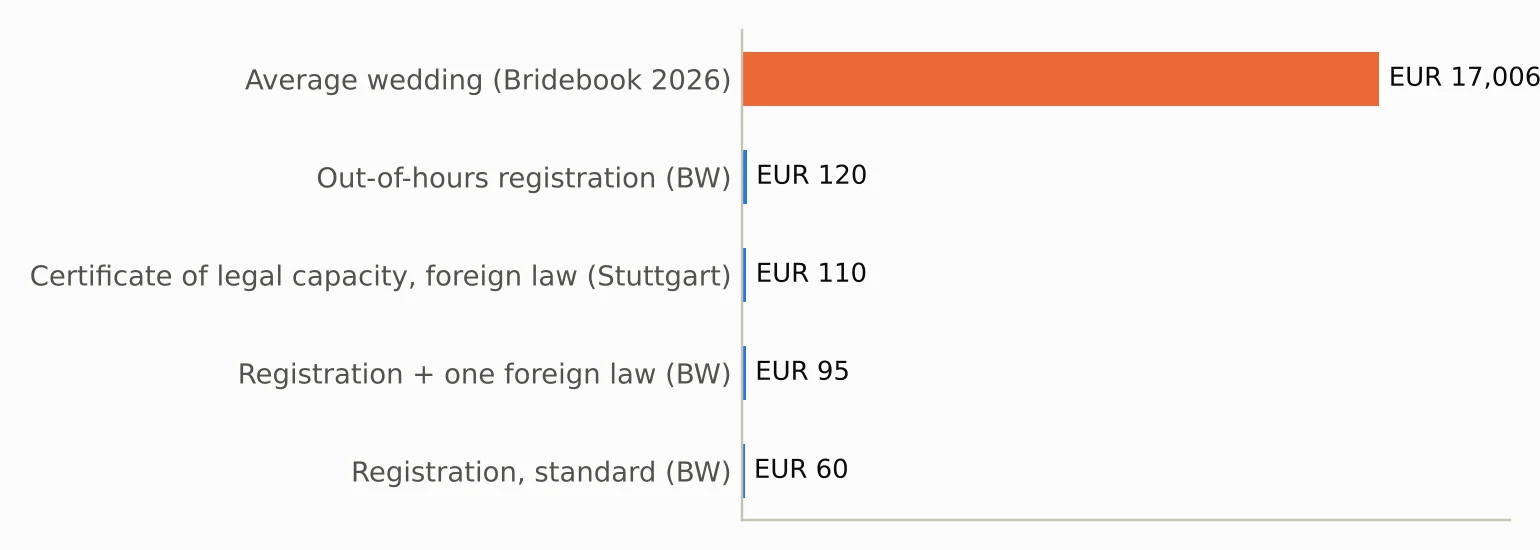
Chart 5. Official fees compared with the average wedding. Fee examples: BW service portal (registration EUR 60, plus EUR 35 for each foreign law to be applied, EUR 120 outside opening hours); City of Stuttgart (certificate of legal capacity EUR 65, or EUR 110 if foreign law applies). Fees vary by state and municipality.
If you want to argue that regulation drives the cost of marrying, the numbers are against you. The biggest official fee I found for an ordinary case is about EUR 120, which is 0.7% of the average wedding bill. Published fee schedules also disagree with each other (EUR 44, 55 or 60 for the same basic check depending on state and year), which is an irritation, not a cost driver.
Where regulation really does hurt
There are four places where rules add friction, uncertainty or cost. None of them explains the price level, but they are real, and for some couples they are the worst part of the process.
| Rule | What it does | Who it hits | Verdict |
|---|---|---|---|
| Foreign-law examination and certificate of legal capacity | If one partner is a foreign national, the registrar must apply that person's home law and usually needs a certificate from the home authority, or an exemption. Extra fees and weeks of paperwork follow. | In 2024 there were 18,122 + 21,542 = 39,664 German-foreign marriages, 11.4% of all marriages. | Largest real burden. Needs EU-style mutual recognition and digital processing. |
| Civil-ceremony monopoly (Standesamtsvorbehalt) | Only a registrar's ceremony creates a legal marriage; church or celebrant ceremonies have no legal effect on their own. | Everyone who wants a ceremony of their own, who then pays for two ceremonies. | Defensible for record-keeping, but it pushes the "real" ceremony into the private market as an extra product. |
| GEMA music licensing | Private celebrations are generally exempt, but "private" depends on personal bonds between guests, which is not defined by guest count and is unclear for paid DJs and hired halls. | Couples with larger guest lists, venues, DJs. | Legal grey zone that lets venues pass on fees "to be safe". A clear safe harbour would fix it. |
| Fragmented fee and process rules | Fees, forms, appointments and opening hours differ by state and municipality. Some offices add surcharges for out-of-hours or weekend slots. | Everyone, especially couples who marry away from home. | Annoying, small in euros, easy to harmonise. |
It is also worth noting what is absent. There is no state requirement to hire a caterer, to rent a venue, to hold a reception, to invite any number of guests, to wear anything, or to buy anything. The state asks for a few documents and a small fee. Every euro above that is a product somebody sold you, usually with the framing that a wedding without it would be a failure.
Nor are wedding costs tax-deductible: they count as private living costs, so couples pay with after-tax money and the industry's price tags carry full VAT.
Why a Whole Industry Grew in the Gap
An industry appears where three conditions meet: high stakes, low frequency and high social pressure. A wedding has all three. Couples do it once, they have no benchmark, they are often organising it for relatives, and the date is usually fixed a year ahead. Under those conditions the normal discipline of price comparison breaks down: nobody wants to haggle over the best day of their life.
The way it is sold amplifies the effect. Venues and planners sell an emotional narrative, "your perfect day", with a price attached that is easy to justify one item at a time. The photographer is "irreplaceable", the florist "sets the mood", the plated dinner "is what guests remember". Every item is plausible alone. The total is EUR 17,000, and the buyer has no yardstick for saying what the whole thing is worth. Add family contributions (Bridebook notes that younger couples rely more on family money), and the price anchor drifts up without anyone feeling the pain.
There is also an honest cost side. Wedding suppliers work a few peak weekends per year, carry big fixed costs (a castle, a barn, a team), face real no-show and weather risk, and often work long hours on a Saturday night. A catering company charging EUR 113 per head for location and food is not obviously robbing anyone. The better question is whether the couple was able to choose that supplier at that price, or whether the choice was made for them by the bundle.
The problem is not that weddings cost money. It is that the buyer is locked in before the price is known.
What couples are doing about it
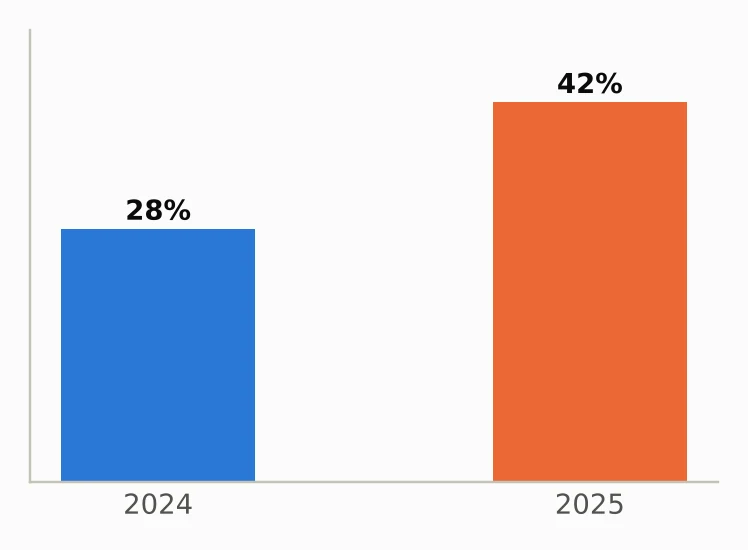
Chart 6. Same location for ceremony and party. Source: Bridebook Wedding Report 2026.
The share of couples who held ceremony and party in the same location rose from 28% to 42% in a single year. That is a consumer strike by other means: fewer transport costs, fewer separate bookings, a shorter, smaller event. Church weddings are also falling away. The German Bishops' Conference counted 22,504 Catholic weddings in 2024, down about 18% from 2023, and free ceremonies are filling the gap, at a price.
Wedding cost comparison without the glamour
| Scenario | What you pay for | Rough cost (my reading of the sources) |
|---|---|---|
| Registry office only, dinner at a restaurant | Fee (about EUR 60 to 120), a restaurant table for 10 to 20, rings | Roughly EUR 1,100 to 2,300 for food and drink at the EUR 113 per-head average for 10 to 20 guests, plus fees, rings and outfits |
| Small wedding, up to 30 guests | Venue and food, photographer, a free ceremony | Average about EUR 12,300 (Bridebook) |
| Typical wedding | Venue incl. food, DJ, dress, photographer, decoration | Average about EUR 17,000 |
| Large wedding, 150+ guests | As above, scaled up | Average about EUR 26,700 |
The first row is my own illustration built from the fee and per-head figures above, not a surveyed average. The per-head figure covers location and catering.
How It Could Change
Fixing this does not need a revolution. It needs three things: price transparency before the deposit, unbundled purchasing, and fewer bureaucratic traps. The proposals below are my own, grouped by who would have to act. They are suggestions for debate, not existing law.
| Proposal | What it would do | Who acts |
|---|---|---|
| 1. All-in price sheet before any deposit | Venues must show one total per guest including service charge, staff hours, corkage, cleaning, minimum spend and Saturday surcharges, for the actual date. No surprises after signing. | Industry standard first; consumer-protection law if the industry does not move. |
| 2. Unbundle venue and catering | Standard option to bring an external caterer or drinks at a transparent, capped fee. Marketplaces filter and rank by "free choice of caterer". | Venues, wedding marketplaces, couples as buyers. |
| 3. Cap or ban compulsory drink purchase and open-ended corkage | Corkage limited to a real service cost, and no hidden obligation to buy the house wine. | Industry code or consumer-protection rule. |
| 4. Real off-peak pricing | Friday, Sunday and weekday weddings with minimum spends that actually fall, not just a token discount. | Venues; couples with flexible dates. |
| 5. Digital registration and mutual recognition | Online registration nationwide, one fee schedule per Land, and quick acceptance of foreign civil-status documents. EU rules on public documents (Regulation 2016/1191) already point in this direction; use them fully. | Länder and municipalities; the federal government for the national rules. |
| 6. A clear GEMA safe harbour for private weddings | Define "private" for weddings so that guest numbers and a hired DJ do not create a grey zone that venues exploit. | Federal legislator and GEMA. |
| 7. Optional authorised celebrants (long term) | Several countries let authorised celebrants conduct legally binding ceremonies. Germany could pilot this while keeping registry checks for bigamy and capacity. Trade-off: fraud control. | Federal legislator; the biggest change on this list. |
What couples can do right now
- Ask for the all-in price per guest for your actual date, including every fee, before leaving a deposit.
- Compare venue models, not just venues. Free choice of caterer or a restaurant booking often costs less than a fully bundled estate.
- Choose the date as a price decision. A Friday or off-season date can lower the minimum spend materially.
- Cut the guest list first. It is the biggest lever: the average difference between a 30-guest and a 150-guest wedding is about EUR 14,000.
- Keep the legal part and the party separate in your head. The marriage costs about EUR 60; the party costs what you decide it costs.
The Bottom Line
Germany does not make marriage expensive. It makes it somewhat awkward, especially for international couples, and then leaves the field to an industry that sells the party as if it were the marriage. If lawmakers want to help, the best lever is not another regulation of weddings. It is making the price visible and the bundle optional. If couples want to help themselves, the best lever is the guest list. And if the industry wants to keep its customers in a shrinking market, it will have to earn them by selling the product rather than the lock-in.
Method, Limits and Sources
What this article is. A critical opinion piece backed by public data. The cost figures come from couple surveys by wedding platforms (Bridebook, WeddyPlace), which are not representative statistics. The marriage counts are official Destatis figures. Fee examples are taken from published municipal and state service pages and differ by place and year; check your own Standesamt before you plan.
What is not proven. I found no public data on supplier profit margins, so claims that couples are charged a deliberate wedding premium are inference from the price structure, not demonstrated fact. Venue examples (minimum spend, corkage, staff rates) come from individual published price sheets and are illustrations, not market averages. The reform proposals are the author's own and are not existing law. This is not legal or financial advice.
Sources
- Bridebook, Wedding Report 2026: average costs, categories, guest counts, venue types, same-venue share. bridebook.com
- Sparkasse, wedding cost guide (distribution of budgets, per-guest estimate). sparkasse.de
- Dr. Web, Hochzeitsmarkt (WeddyPlace Hochzeitsstudie 2024: EUR 15,452 average, EUR 7,803 location plus catering, EUR 6.2 bn market estimate; church wedding figures). drweb.de
- Statistisches Bundesamt (Destatis) via Statista: marriages 2017 to 2024; German-foreign marriages 2024; marriage rate 4.2 per 1,000; divorces about 129,300 in 2024. de.statista.com, presseportal.de
- Service BW / FIM Portal: registration of marriage, EUR 60, plus EUR 35 per foreign law, EUR 120 outside opening hours (service L100009); City of Nuremberg fee table; City of Stuttgart, certificate of legal capacity. nuernberg.de, stuttgart.de
- Venue price sheets: Kitchen & Soul wedding book 2024 (minimum spend, per-person price, staff rate); Historischer Messinghof via Bridebook (corkage); Rödelsee info sheet 2026 (drink-purchase obligation); Tress Brüder event terms 2026 (planning flat fee for small groups); locationguide24 wedding folder 2016 (chair covers, older price level).
- GEMA and private events: IHK Hannover GEMA leaflet; GEMA info sheet of the VdK; SoVD Schleswig-Holstein note on private events; netzpolitik.org discussion of the "private vs public" boundary.
- Hochzeitskosten-Rechner (deutschland-rechner.de): wedding costs not tax-deductible. EU Regulation 2016/1191 on public documents. eur-lex.europa.eu
Written by Andrew Yarahmadi, founder of Goinenglish, Stuttgart. You are welcome to use this case study in class with a reference to www.goinenglish.de.