


Should Social Media Be Banned for Under-16s?
“Protecting Children or Taking Away Their Freedom?”
60-minute lesson. Skills: Speaking, Vocabulary, Reading, Grammar.
Grammar focus: First Conditional, Modal Verbs for Advice and Obligation (should / must / have to / don’t have to)
Let's agree on the next steps by Friday.

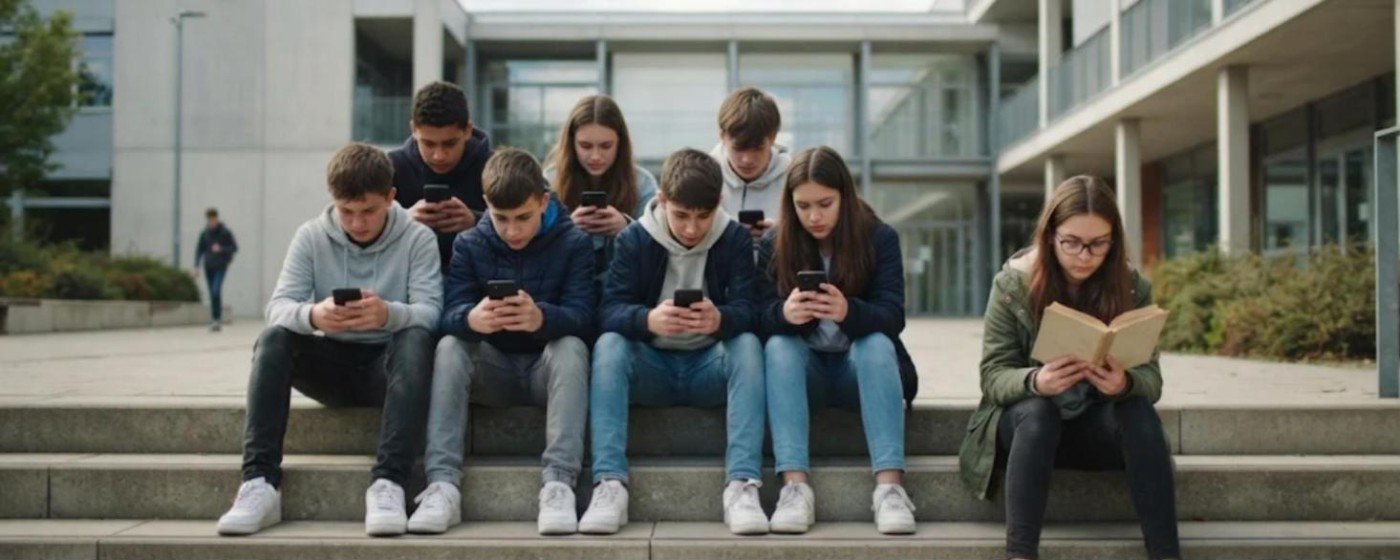
1Warm-up Questions (Discussion)
- At what age do young people in your country usually start using social media?
- What are the good and bad sides of social media for teenagers?
- Who is responsible for children’s safety online: parents, schools, companies or the government?
- Would a ban really stop young people from using social media?
2Vocabulary Exercise – Match the Words
Match the words (1–8) with their correct definitions (A–H).
- Ban
- Age verification
- Mental health
- Cyberbullying
- Addictive
- Platform
- Screen time
- Loophole
- A.The amount of time spent looking at a phone, computer or TV
- B.Using the internet to hurt, threaten or embarrass someone
- C.A website or app where users share content
- D.A way to avoid a rule without officially breaking it
- E.Checking how old a person is before they can use a service
- F.An official rule that says something is not allowed
- G.A person’s emotional and psychological well-being
- H.Making people want to use or do something again and again
3Fun Vocabulary Exercise – Agree, Disagree, or It Depends
Read the statements and choose Agree (A), Disagree (D), or It Depends (ID).
- Social media is more dangerous than useful for under-16s.
- Parents, not governments, should decide about social media.
- Teenagers will always find a loophole.
- Social media companies should pay fines if children use their apps.
- Schools should teach how to use social media safely.
4Reading Article
A New Law for Young Users
In December 2025, Australia became one of the first countries in the world to introduce a social media ban for children under 16. Large platforms must now take reasonable steps to stop young people from creating accounts, or they can face very high fines. Other countries, including several in Europe, are discussing similar rules. The idea is popular with many parents, but it has also caused a big debate.
Supporters say that social media can harm young people’s mental health. Many apps are designed to be addictive: they use endless scrolling, notifications and likes to keep users online for as long as possible. Long screen time can affect sleep and concentration. Young people may also compare themselves with perfect pictures of others and feel bad about their own lives.
Another problem is cyberbullying. In the past, bullying usually stopped when a child came home from school. Today, it can continue day and night through messages and comments. Supporters believe that a ban gives children a few more years to grow up without this pressure.
However, critics have doubts. First, it is difficult to check age online. Age verification systems can collect a lot of personal data, and young people often find loopholes, for example by using an older sibling’s account. Second, social media is not only negative. Many teenagers use it to stay in contact with friends, learn new things and find communities, especially if they feel alone where they live.
Some experts also say that a ban takes responsibility away from the platforms. Instead of banning young users, they argue, companies should make their apps safer for everyone and remove addictive features. Others believe that parents and schools should teach children how to use social media in a healthy way.
In conclusion, most people agree that children need protection online, but they do not agree on the best way. A ban may help some young people, but it will only work well if parents, schools and companies also play their part.
5Grammar Exercise 1 – First Conditional
Complete the sentences with the correct form of the verbs in brackets.
- If the government __________ (introduce) a ban, many teenagers will look for loopholes.
- If children sleep better, they __________ (concentrate) better at school.
- Platforms __________ (pay) high fines if they don’t check users’ age.
- If parents __________ (talk) openly with their children, they will understand the risks.
- If teenagers lose their accounts, some of them __________ (feel) lonely.
6Grammar Exercise 2 – Modal Verbs for Advice and Obligation (should / must / have to / don’t have to)
Complete the sentences using should, must, have to or don’t have to.
- Under the new law, platforms __________ check the age of their users.
- Parents __________ set clear rules for screen time.
- Teenagers __________ share personal information with strangers.
- In some countries, children __________ ask their parents before they open an account.
- You __________ delete an app completely; you can just use it less.
7Case Study & Role Play – The School Conference
Situation
Your country is discussing a social media ban for under-16s. A school in Stuttgart organises a conference with parents, students, teachers and a representative from a technology company. At the end, the school will send a recommendation to the government.
Group Roles (4 Groups)
Group 1 – Parents
- Worry about mental health and cyberbullying
- Want help from the government
- Are unsure how to control phones at home
Group 2 – Students
- Use social media to stay in contact with friends
- Think a ban is unfair
- Suggest better safety features instead
Group 3 – Teachers
- See the effects of screen time in class
- Want lessons about media safety
- Support clear rules at school
Group 4 – Technology Company
- Explains what the platform already does for safety
- Warns about problems with age verification
- Wants to avoid a complete ban
Task
- Each group prepares three key arguments.
- Hold a 10–15 minute discussion.
- The class writes a short recommendation: ban, no ban, or a different solution.
© Goinenglish. Free for classroom and self-study use with this notice. www.goinenglish.de
Train this topic with a real trainer.
Goinenglish runs Business English courses for companies, in-company and online.
More B1 exercises


Should We Work Only Four Days a Week?
For about one hundred years, the five-day work week has been normal in many countries.


Should Bosses Track What Employees Do Online?
Since the pandemic, millions of people work from home for at least part of the week.


Should Companies Stop Short Business Flights?
Before the pandemic, business trips were a normal part of working life.