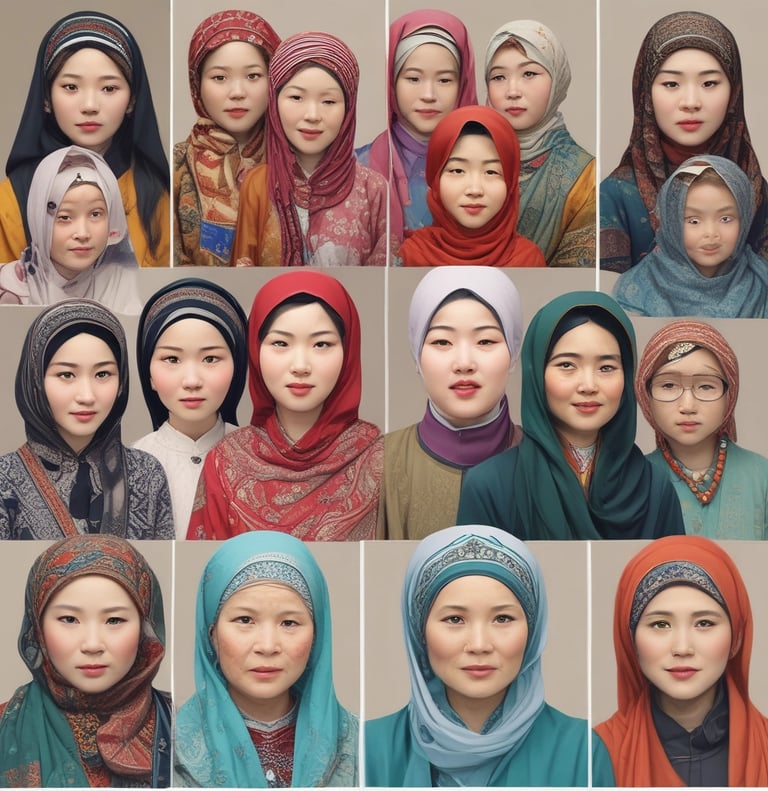



Is diversity hiring tokenism?
Is Diversity Hiring Tokenism?
“Congratulations! You’re Hired… Please Represent Everyone.”
1. Warm-up Questions (Discussion)
What does “diversity” mean in the workplace?
Have you heard the word tokenism before? What do you think it means?
Should companies actively try to hire diverse employees?
Can diversity policies ever be unfair?
2. Vocabulary Exercise – Match the Words
Match the words (1–8) with their correct definitions (A–H).
Words
Diversity
Tokenism
Inclusion
Equal opportunity
Representation
Bias
Merit
Workplace culture
Definitions
A. A set of shared values and behaviors at work
B. Giving opportunities based on ability and achievement
C. Treating people unfairly due to personal preferences or stereotypes
D. The presence of different backgrounds, identities, or experiences
E. Fair access to jobs and promotion for everyone
F. Making people feel welcomed and valued
G. Hiring someone mainly to appear diverse
H. Showing different groups within an organization
3. Fun Vocabulary Exercise – Which Opinion Matches?
Read each statement and decide if it supports Diversity Hiring (D), criticizes it as Tokenism (T), or says It Depends (ID).
Hiring should always be based on merit alone.
Diverse teams make better decisions.
Hiring one person from a minority group is not real inclusion.
Bias can affect hiring decisions without people realizing it.
Representation matters, especially in leadership roles.
4. Reading Article
Diversity Hiring: Fair Progress or Empty Gesture?
In recent years, many organizations have adopted diversity hiring policies to create more inclusive workplaces. Supporters see these efforts as necessary steps toward equal opportunity, while critics argue that they often result in tokenism. The debate raises important questions about fairness, merit, and workplace culture.
Supporters of diversity hiring argue that traditional recruitment systems are influenced by unconscious bias. Even when employers believe they are being fair, they may prefer candidates who look, think, or act like themselves. Diversity initiatives aim to correct this imbalance by ensuring underrepresented groups have real access to opportunities.
Another argument focuses on representation. When employees see people like themselves in leadership positions, it sends a powerful message of belonging and possibility. Representation can improve motivation, confidence, and engagement. Supporters argue that diversity hiring is not about lowering standards, but about widening the pool of talent.
Critics, however, worry that diversity hiring can lead to tokenism, where individuals are hired primarily because of their identity rather than their skills. This can create pressure on employees to represent an entire group rather than being judged as individuals. Tokenism may also damage credibility, making colleagues question a person’s merit unfairly.
There is also concern about workplace culture. If diversity hiring is not supported by true inclusion, new employees may feel isolated or excluded. Hiring alone does not guarantee equality. Without supportive leadership and clear values, diversity policies can feel symbolic rather than meaningful.
Some argue that the real problem lies in how diversity hiring is implemented. When companies focus only on numbers or public image, they risk reducing people to statistics. However, when diversity hiring is combined with fair evaluation, mentorship, and long-term development, it can strengthen teams and innovation.
The key issue is balance. Fair hiring should recognize both merit and the impact of systemic barriers. Diversity hiring does not have to be tokenism, but it becomes so when organizations fail to create inclusive environments or treat employees as symbols rather than professionals.
In conclusion, diversity hiring can be either progress or tokenism depending on intention and execution. When done thoughtfully, it promotes fairness and opportunity. When done poorly, it risks reinforcing the very inequalities it aims to solve.
5. Grammar Exercise 1 – Passive Voice
Rewrite the sentences using the passive voice.
Companies introduce diversity hiring policies.
Managers sometimes ignore bias.
Employers hire candidates based on representation.
Organizations create inclusive cultures.
Critics question diversity initiatives.
6. Grammar Exercise 2 – Contrast (Although / However / Whereas)
Complete the sentences using although, however, or whereas.
Diversity hiring aims to increase fairness, __________ it is often misunderstood.
Some employees support diversity initiatives, __________ others see them as tokenism.
__________ merit is important, representation also matters.
Diversity hiring can improve innovation; __________, it must be done carefully.
Companies focus on numbers, __________ employees want inclusion.
7. Case Study & Role Play – Hiring Decision
Situation:
A company is hiring for a leadership role and wants to improve diversity. Some employees worry the decision may be tokenistic.
Group Roles (4 Groups):
Group 1 – Company Leadership
Want to improve diversity and public image
Emphasize fairness and representation
Defend hiring criteria
Group 2 – Employees
Concerned about merit and fairness
Fear tokenism
Want transparent hiring processes
Group 3 – Diversity & Inclusion Team
Focus on inclusion and long-term change
Argue diversity improves performance
Propose support systems
Group 4 – Ethics Committee / Observers
Evaluate fairness objectively
Consider workplace culture
Recommend best practices
Task:
Each group prepares three key arguments
Hold a 10–15 minute role-play discussion
Leadership announces the final hiring decision